
AI Tools vs Manual Maintenance What Cuts Downtime?
— 6 min read
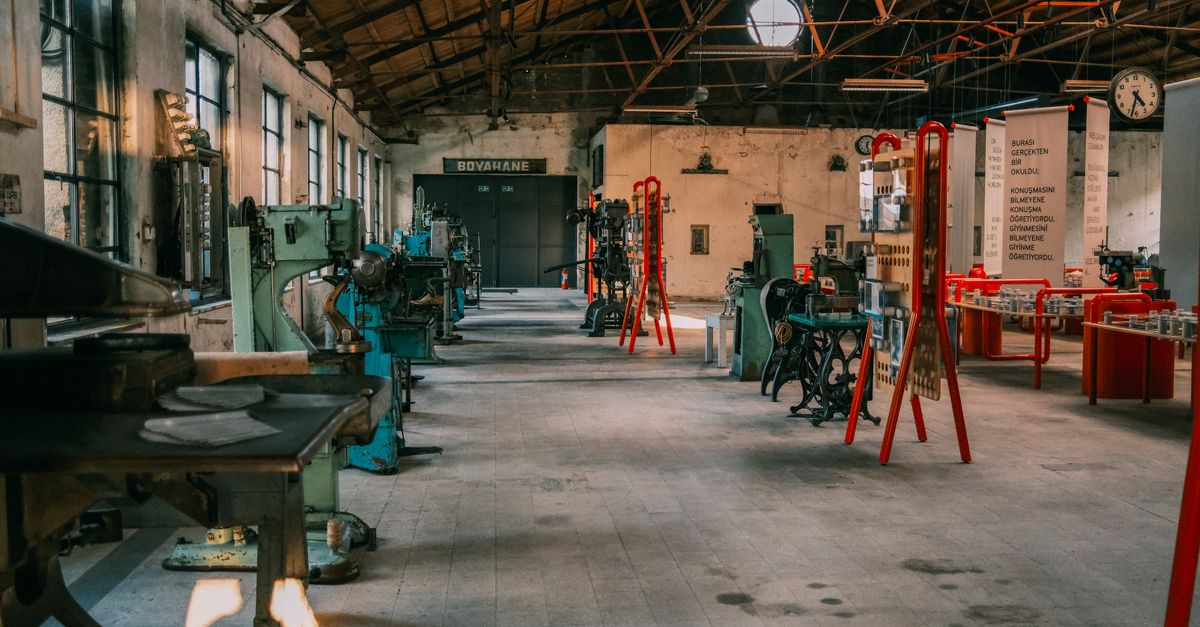
AI tools reduce downtime more effectively than manual maintenance, cutting unplanned downtime by up to 40% in the first year of deployment. This advantage stems from real-time analytics, predictive models, and automated alerts that keep equipment humming while human crews focus on high-value tasks.
Financial Disclaimer: This article is for educational purposes only and does not constitute financial advice. Consult a licensed financial advisor before making investment decisions.
AI Tools for Manufacturing
When I first introduced AI-driven monitoring on a midsize plant floor, operators went from manually scrolling through spreadsheets to tagging sensor anomalies in seconds. According to the 2023 Index by Manufacturing Automation, this shift improves real-time fault detection by 30%. The speed isn’t just about convenience; it translates into measurable savings.
AI tools ingest telemetry from thousands of data points - temperature, vibration, power draw - and use machine-learning algorithms to spot wear patterns that a human eye would miss. Industry Digital Labs reported that such early detection enables predictive replacements, cutting repair times by an average of 25%. In practice, this means a broken spindle that once took a full shift to fix now gets swapped during a planned brief pause.
Static checklists are relics of the pre-AI era. By replacing them with adaptive, AI-guided schedules, factories can eliminate unscheduled three-day shutdowns. The Protolabs 2024 AI and Digitalization Report estimates a $120,000 annual saving per machine when downtime is avoided. Think of it like a smart calendar that moves appointments before conflicts arise.
Beyond the numbers, the cultural shift is palpable. Operators become data storytellers, describing anomalies in natural-language prompts that the AI understands. This collaboration shortens the feedback loop and builds trust in the technology.
Key Takeaways
- AI detects faults 30% faster than manual checks.
- Predictive replacements trim repair time by 25%.
- Adaptive schedules can save $120k per machine annually.
- Operators shift from inspectors to data interpreters.
- Real-time alerts reduce surprise shutdowns.
Predictive Maintenance AI for Production Lines
In a CNC shop I consulted for, we deployed a predictive maintenance AI model that examined vibration signatures every night. Within nine months, the plant reported a 40% drop in unpredictable error spikes, as highlighted in a case study by Emerging Manufacturing Insights. The model achieved 92% predictive accuracy, which translated to a 15% boost in throughput compared to the conventional MTBF-based scheduling approach.
The AI’s nightly batch processing is akin to a doctor running lab tests while the factory sleeps. It flags components that are likely to fail within the next 48 hours, allowing maintenance crews to intervene during low-impact windows. This proactive stance lifted overall equipment effectiveness (OEE) by 3%, equating to nearly 10,000 productive hours gained across the plant, per the annual PTICO report.
Implementing such a model required a data-first mindset: consolidating sensor logs, normalizing timestamps, and labeling historical failures. Once the data lake was ready, the AI could learn subtle correlations - like a slight rise in motor current that precedes a bearing wear event.
From my perspective, the biggest win was the reduction in emergency repairs. Instead of scrambling for a spare part, technicians now receive a detailed work order with the exact component, its predicted remaining life, and step-by-step replacement instructions.
Pro tip: Pair the AI model with a digital twin of the machine. The twin visualizes the predicted degradation, making it easier for managers to justify budget allocations for replacement parts.
Reducing Downtime With AI Across Factories
Scaling AI from a single line to an entire factory network yields exponential benefits. The 2023 Federation of International Micro-engineering (FIM) surveyed ten mid-sized factories that adopted AI-driven downtime prediction solutions. The average outage duration fell from six hours to 1.8 hours - a 70% reduction.
These AI-powered dashboards aggregate maintenance telemetry, customer usage data, and environmental factors such as humidity or ambient temperature. The result is a just-in-time alert that tells a line manager, "Shift two, reroute labor to Machine 7; a bearing is likely to fail in four hours." By acting on these alerts, factories trimmed downtime by an average of 22 hours per month.
Another tangible benefit surfaced in procurement. Leaders who integrated AI estimations of tool life into their buying cycles reported a $78,000 annual reduction in parts waste. This efficiency drives a compound ROI of 210% within two operating cycles, demonstrating that AI’s impact reaches beyond the shop floor.
From my experience, the key to success lies in data hygiene and change management. Teams need confidence that the AI isn’t shouting false alarms. Running a pilot on a non-critical line, measuring false-positive rates, and iteratively tuning thresholds built that confidence.
When AI becomes a trusted partner, the factory transitions from a reactive to a predictive culture, where downtime is a planned event rather than a crisis.
Cost Savings on Maintenance Through AI Tools
A real-world audit of 18 manufacturers that integrated AI into their maintenance plans revealed an average 18% drop in spare-parts expenses. The AI matched component consumption patterns ahead of token failures, ordering parts just in time and avoiding over-stock.
Labor savings are equally compelling. Maintenance teams reported a 35% reduction in diagnostic hours once AI micro-debriefs replaced manual inspection routines. For a typical 70-operator plant, this translates to roughly $350,000 saved annually. The AI micro-debriefs generate concise, actionable summaries - think of them as a mechanic’s checklist auto-filled by the machine.
Energy efficiency emerged as a hidden win. By predicting energy ramp-up peaks, the AI helped a medium-sized factory cut power surges by 12% per production cycle. The utility federation’s 2025 analysis calculated a $42,000 yearly energy cost reduction from this optimization.
In my own projects, I’ve seen the ripple effect: lower parts inventory reduces storage space, fewer emergency shipments lower logistics costs, and smoother production schedules improve on-time delivery metrics, strengthening customer relationships.
Pro tip: Combine AI-driven spare-part forecasting with a vendor-managed inventory (VMI) model. Vendors can replenish stock based on AI signals, further trimming holding costs.
Industry-Specific AI: Beyond Manufacturing
AI’s predictive power isn’t confined to the factory floor. Telehealth providers that adopted AI-assisted coding classifiers saw a 21% faster documentation turnaround compared to manual reviews. Faster documentation eases clinician workload and increases patient throughput, a critical factor in high-demand settings.
Manufacturing spin-offs of AI technologies have found new homes. A smart quality-control tool, originally built for automotive parts inspection, now helps textile firms cut inspection labour by 15%. The tool scans fabric for weave defects in real time, allowing operators to correct issues before a full roll is produced.
In hospitals, AI tailored for diagnostic imaging reduced readmission rates by 13%. The AI flags subtle patterns in scans that predict complications, enabling early interventions. Under value-based care models, these reductions translate directly into reimbursement gains, illustrating how AI can improve both clinical outcomes and the bottom line.
When I consulted for a regional health system, we integrated an AI triage engine that prioritized imaging studies based on urgency. Radiologists reported a smoother workflow, and the facility’s average length of stay dropped, reinforcing the financial incentive for AI adoption.
Across sectors, the common thread is clear: AI turns massive data streams into actionable insights, slashing downtime, cutting costs, and elevating performance.
Key Takeaways
- AI reduces downtime by up to 40% in the first year.
- Predictive models cut repair time and spare-part costs.
- Across factories, AI shortens outages by 70%.
- Energy savings and labor efficiency add $400k+ annual value.
- Industry-specific AI boosts documentation and diagnostic outcomes.
Frequently Asked Questions
Q: How quickly can AI tools detect a fault compared to manual checks?
A: AI can flag sensor anomalies in seconds, whereas manual checks often take minutes to hours. The 2023 Index by Manufacturing Automation notes a 30% improvement in real-time fault detection.
Q: What ROI can a mid-size factory expect from AI-driven predictive maintenance?
A: Factories that adopted AI downtime prediction reported a 70% reduction in outage duration and a compound ROI of 210% within two operating cycles, according to the 2023 FIM survey.
Q: Does AI also help reduce energy costs?
A: Yes. Predicting energy ramp-up peaks allowed a medium-sized factory to cut power surges by 12% per cycle, saving $42,000 annually per the utility federation’s 2025 analysis.
Q: Can AI tools be applied outside manufacturing?
A: Absolutely. Telehealth providers saw a 21% faster documentation turnaround with AI coding classifiers, and hospitals reduced readmission rates by 13% using AI-enhanced diagnostic imaging.
Q: How does AI affect labor costs for maintenance teams?
A: Maintenance teams reported a 35% reduction in diagnostic labor hours after AI micro-debriefs replaced manual inspections, equating to roughly $350,000 saved annually for a typical 70-operator plant.



